





















Blog > Cx excellence
How top jewelry brands deliver memorable CX
Jewelry shoppers don't buy the way most eCommerce customers do. They're picking an engagement ring at 11pm from a phone in bed, DMing a brand to ask if a birthstone necklace will arrive before a birthday, or walking into a boutique to have a bracelet resized before a wedding. Every purchase carries meaning, and every support interaction either protects that meaning or cheapens it.
That's what makes jewelry one of the hardest categories to get customer experience (CX) right. The stakes are emotional, the price points are high, and the margin for a generic or slow reply is almost zero.
The brands that stand out have figured out how to make every touchpoint feel considered, whether it's a $60 pair of earrings or a $16,000 engagement ring. Here's a look at what they're doing well, and the practical lessons any growing jewelry brand can borrow.
Why memorable CX matters so much in jewelry
Jewelry sits at the intersection of high emotion and high price, and that combination changes what customers expect from support.
Purchases are almost always tied to a moment: an anniversary, a graduation, a proposal, a gift someone doesn't want to get wrong. When something goes sideways, whether it's a sizing question or a delayed shipment, the anxiety is real because the stakes feel personal, not transactional.
Trust matters more here than in most categories. Customers are handing over real money for something they usually can't touch or try on before buying, especially online. Every interaction, from a pre-purchase sizing question to a post-purchase care instruction, either builds that trust or erodes it.
And expectations don't shift based on brand size. A customer messaging a boutique label expects the same warmth and speed as one calling a heritage maison, just delivered in a different register. Getting that balance right, at any scale, is what separates the jewelry brands people rave about from the ones they simply buy from once.
5 jewelry brands setting the standard
Tiffany & Co.: Clienteling that remembers the moment, not just the order
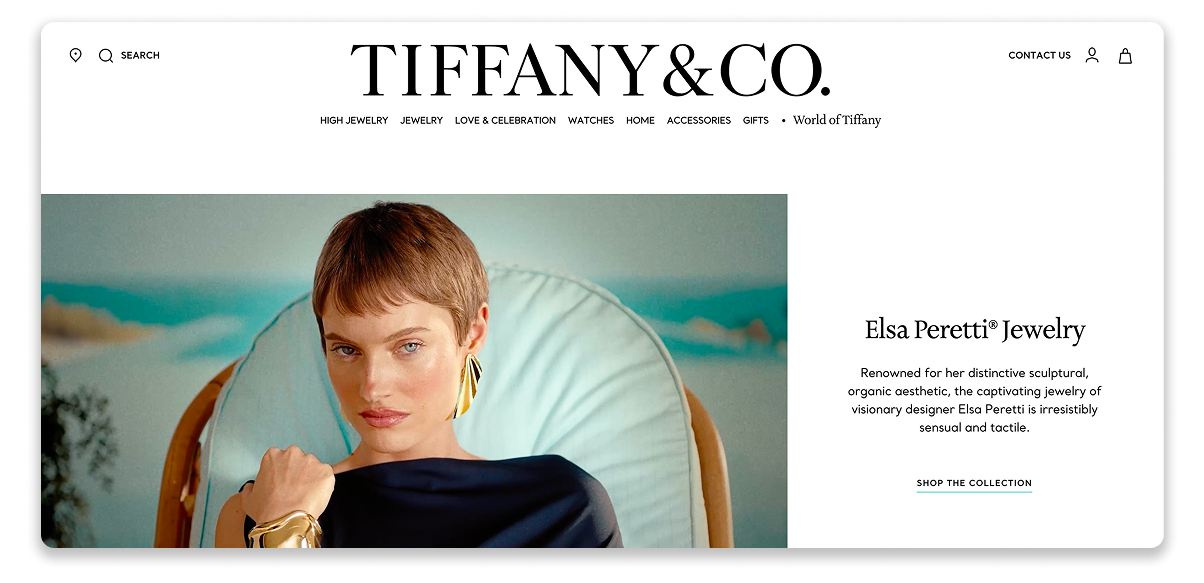
Tiffany has spent decades building a service model where store associates keep detailed, ongoing profiles on regular clients, including birthdays, anniversaries, and past purchases, so recommendations feel personal rather than scripted. Associates carry company-provided devices to look up products and pull up customer shopping profiles on the spot, adding notes and preferences so each shopper gets personalized service every visit.
That same continuity extends beyond the counter, with associates reaching out between visits to build rapport, and Tiffany runs its own e-commerce in 13 countries to keep the experience consistent online and off. On top of that, Tiffany offers complimentary personal shopping, with client advisors providing gift suggestions for any occasion.
Key takeaway: Clienteling turns a single sale into an ongoing relationship, but it only works if every associate has access to the same customer history.
Cartier: Service as an extension of craftsmanship
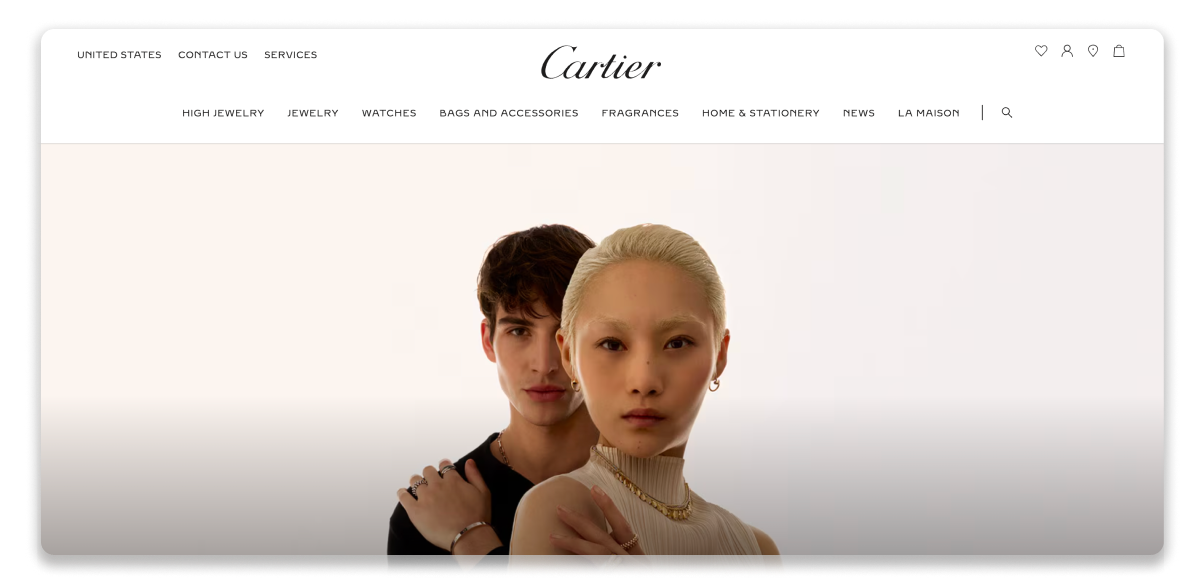
Cartier treats after-sales care as seriously as the jewelry itself. The Maison frames its advice, maintenance, repairs, adjustments, and personalization as part of a rich, ongoing relationship of trust with each customer, not a one-time transaction.
That philosophy shows up in concrete guarantees: customers can sign up for Cartier Care to get an extended eight-year warranty, on top of the standard International Warranty that covers eligible creations for two years from purchase.
Appointments are optional but encouraged, since booking ahead is recommended to optimize the boutique experience, though many locations also accommodate walk-ins for service visits.
Key takeaway: Long-term warranties and unhurried in-boutique appointments turn maintenance visits into brand touchpoints instead of chores.
Pandora: Personalization powered by a single customer view
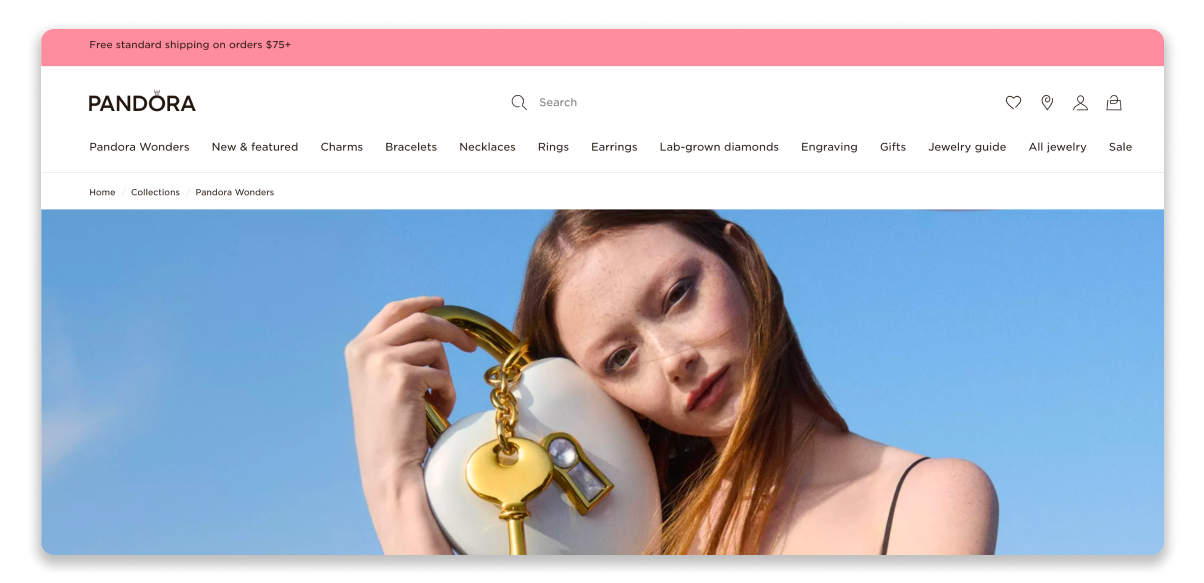
Pandora runs one of the largest personalization operations in jewelry, built on a unified data platform. The brand serves 670 million visits a year across physical and online stores in more than 100 countries, and it uses a master consumer view dashboard to segment and tailor messaging at that scale.
The payoff has been measurable: an 80% increase in email marketing growth from personalization, a 50% lift in click-to-open rate across 65 million personalized emails, and DKK 255 million in quarterly revenue driven by personalization.
In-store, the brand backs that up with human touches like engraving services expanded to 1,450 stores and a loyalty program built around styling guidance and early access to new collections.
Key takeaway: Personalization at scale depends on a single customer view. Without it, "personalized" recommendations are just guesses.
Blue Nile: Building trust without a storefront
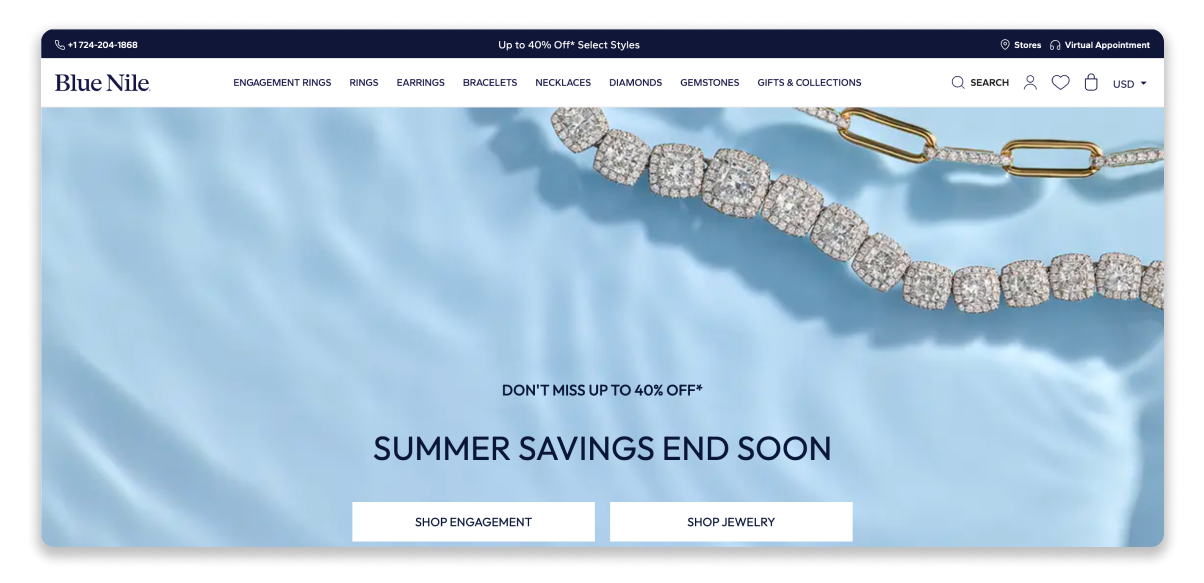
As one of the original online jewelers, Blue Nile had to solve a problem physical jewelers don't face: earning trust in a big-ticket purchase with zero in-person interaction. Its answer is a layered set of guarantees, including secure delivery, industry-leading diamond certification, 30-day returns, and a lifetime warranty on every order.
The brand backs this with non-commissioned diamond and jewelry consultants who are there to educate rather than upsell, available by phone, live chat, or email depending on how complex the question is. Even after the sale, the relationship continues: Blue Nile offers free cleaning, inspection, and prong tightening for as long as a customer owns the piece.
Key takeaway: When customers can't hold the product before buying, guarantees and unbiased expert advice do the work a showroom normally would.
Melinda Maria: Boutique warmth backed by a managed team
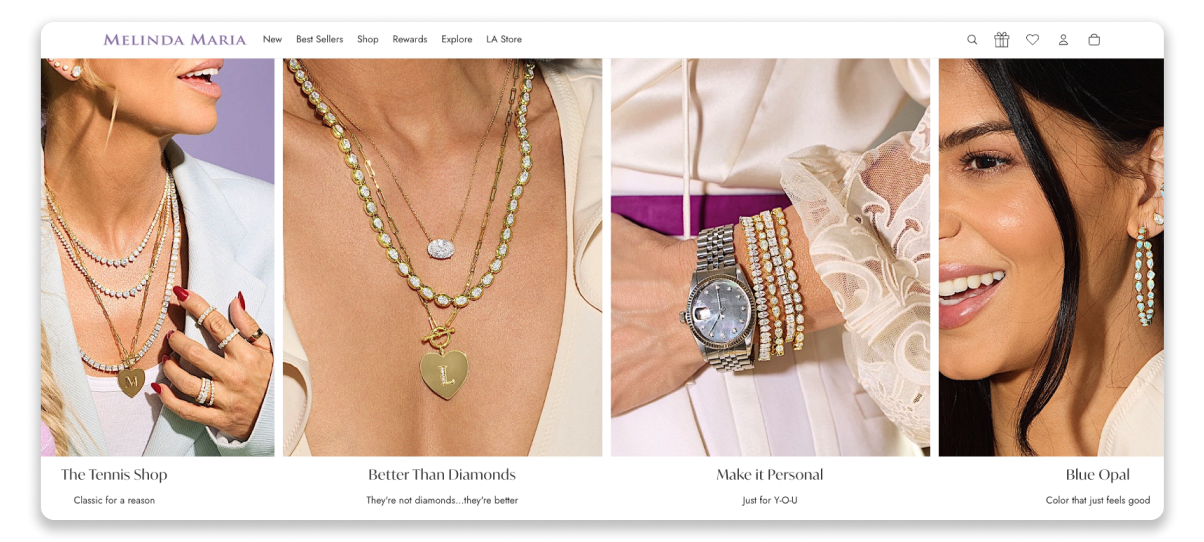
Melinda Maria built its following on accessible, handcrafted luxury and a loyal customer base that treats each piece as a keepsake. That kind of relationship doesn't survive generic support, so when demand outgrew what the in-house team could carry alone, the brand partnered with Influx for a single dedicated, brand-trained agent rather than a full outsourced contract.
Sixteen months in, the partnership delivers 96% CSAT, sub-three-minute live chat responses, and an email first response time averaging 22 hours against a 24-hour SLA, with a dedicated agent who reads as part of the in-house team on every conversation.
Key takeaway: A single well-trained, well-managed agent can protect a boutique brand voice at a lower cost and faster setup than hiring in-house or signing with a traditional BPO.
What makes memorable jewelry CX work behind the scenes
Across every brand on this list, the pattern is the same: technology and warranties matter, but the operational foundation underneath them is what actually holds the experience together.
The brands doing this well share a few habits. Advisors and agents have access to full customer context, including past purchases, preferences, and prior conversations, so nobody has to repeat themselves.
Staffing flexes around gifting seasons like Valentine's Day, Mother's Day, and the holidays, when volume spikes hard and fast. Product knowledge runs deep enough to answer real questions about sizing, stone care, and materials, not just order status.
Support covers the channels customers actually use, from live chat and email to Instagram DMs and phone. And quality checks run continuously so tone stays consistent across every agent and shift.
Most jewelry brands know what this should look like. The hard part is building it while everything else in the business is moving just as fast.
How Influx helps jewelry brands deliver memorable CX
Influx provides managed support teams for jewelry and eCommerce brands that need consistent, high-quality service without adding hiring or operational overhead.
Here's how we support jewelry brands. We build and manage your support team, including hiring, training, scheduling, and QA. We document your brand voice so every agent, whether it's one dedicated teammate or a full team, stays consistent across shifts and channels.
Our coverage scales during gifting seasons, product launches, and promotional peaks. We handle email, chat, social, SMS, and phone within one managed operation. And our pricing is flexible and month-to-month, so you can right-size support as your business grows.
You stay focused on product and brand. We manage the day-to-day work of making every customer feel like they're being taken care of.
Frequently Asked Questions
Jewelry purchases are tied to emotional moments and high price points, so customers expect more warmth, accuracy, and reassurance than they would from a typical online purchase, whether they're shopping at a heritage maison or a DTC label.
Brands like Blue Nile use non-commissioned expert consultants and layered guarantees, while brands like Pandora rely on a unified customer data platform to tailor recommendations and messaging across email, chat, and app.
Not necessarily. As Melinda Maria's experience shows, a single dedicated, brand-trained agent embedded in your existing tools can carry tier-1 support while your in-house team focuses on escalations and growth.
Most brands can launch a fully-managed support team within about a week, with agents trained on your brand voice, product range, and customer-care policies before going live.
Get started with Influx
Influx was established in 2013 & has been trusted by 750+ brands globally, ranging from startup to scale.
Influx builds 24/7, near-shore global customer support teams. We provide fully managed, flexible & high-performance agents. Our services range from eCommerce support, tech support, sales support, AI Management, Enterprise solutions and more to give you the customer assistance you need to prioritize other responsibilities and continue scaling your business.
Make your support operations fast, flexible, and ready for anything with experienced, 24/7 support teams working on demand. See how brands work with Influx to deliver exceptional customer support or get a quote now.

Read these next
See how companies work with Influx to deliver flexibility and scale.
Or read our client testimonials or case studies
 6 Circle - small.png)