



Your BFCM plan probably covers the weekend in great detail: extra chat agents, inventory buffers, a promo calendar mapped to the hour. Then Cyber Monday ends, the revenue dashboard looks great, and the plan quietly stops.
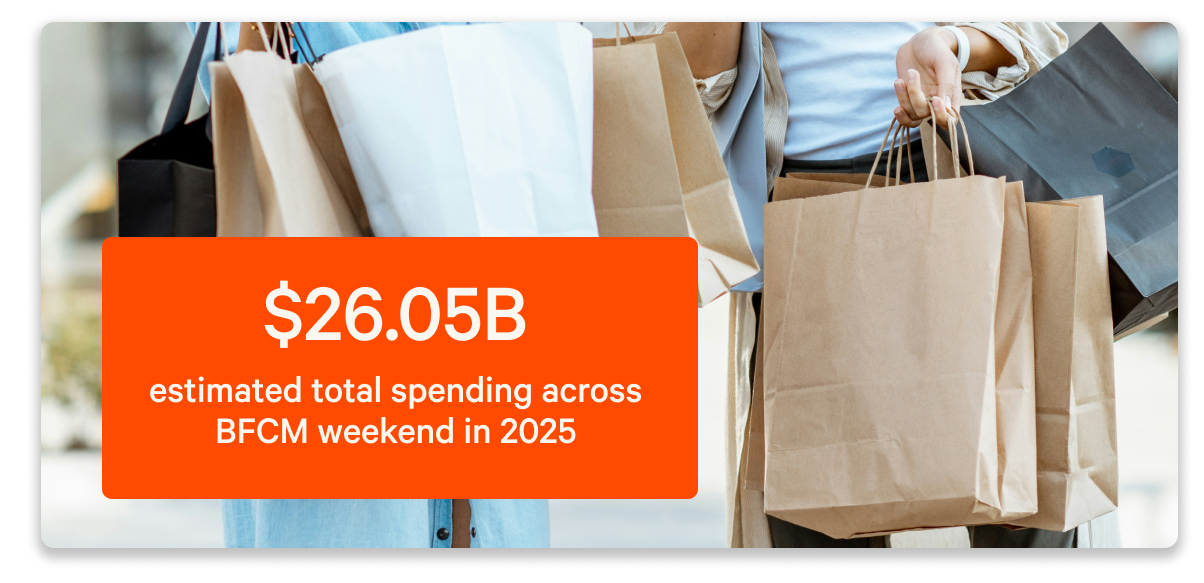
That is where the second half of the work starts. US shoppers spent $44.2 billion online during Cyber Week 2025, and every one of those orders created a follow-up: a package to track, a size that might be wrong, a refund to issue. Those tickets arrive after the celebration, and most teams are staffed for the celebration.
This post covers how big the return wave is, why it lands on your support team first, and how to plan for it before the next BFCM weekend arrives.
How big is the post-BFCM return wave?
The National Retail Federation (NRF) and Happy Returns, a UPS company, projected that 19.3% of online sales would have been returned in 2025, and retailers surveyed expect 17% of holiday sales to be returned.
Run that against your own numbers. If your store booked $500,000 in online BFCM revenue, a 17% to 19.3% return rate means roughly $85,000 to $96,500 comes back as refunds or exchanges. That is an illustration, not a benchmark.
One caveat: NRF’s retailer survey covered large US merchants with more than $500 million in revenue. A smaller DTC brand, especially in apparel or footwear, may see a different rate, so be mindful of your own category-level return rate from last year before you build a forecast.
Timing matters too. Orders placed during BFCM keep arriving for days after the weekend, and plenty of them are gifts that stay wrapped until December 25. Return and refund requests spread across weeks, which is why a weekend-sized staffing plan misses most of them.
Why returns hit support before the warehouse
A return looks like a logistics event, but customers experience it as a conversation. NRF’s report notes that delays in processing generate costly customer service contacts, and delays are common. About half of retailers say it takes 6 to 10 days to restock returned items, and 40% have had to prioritize outbound shipping over inbound returns because of limited warehouse or third-party logistics capacity.
Shoppers are not waiting patiently. 82% say a return should take 10 minutes or less, and 76% are more likely to choose a return option with an instant refund or exchange. When a refund takes a week and nobody explains why, they write in.
A typical post-BFCM queue fills up with:
- Refund status requests (“I shipped it back, where is my money?”)
- Return label and eligibility questions
- Exchange requests for a different size or color
- Gift returns without a receipt
- Wrong or damaged item claims
- Policy questions about deadlines and fees
Bracketing and fraud add review time
Some of those tickets need a closer look. Merchants told NRF that 23% of purchases include a bracketed item, meaning the shopper bought several sizes or colors with the intent to keep one. That figure rises to 26% in apparel and footwear.
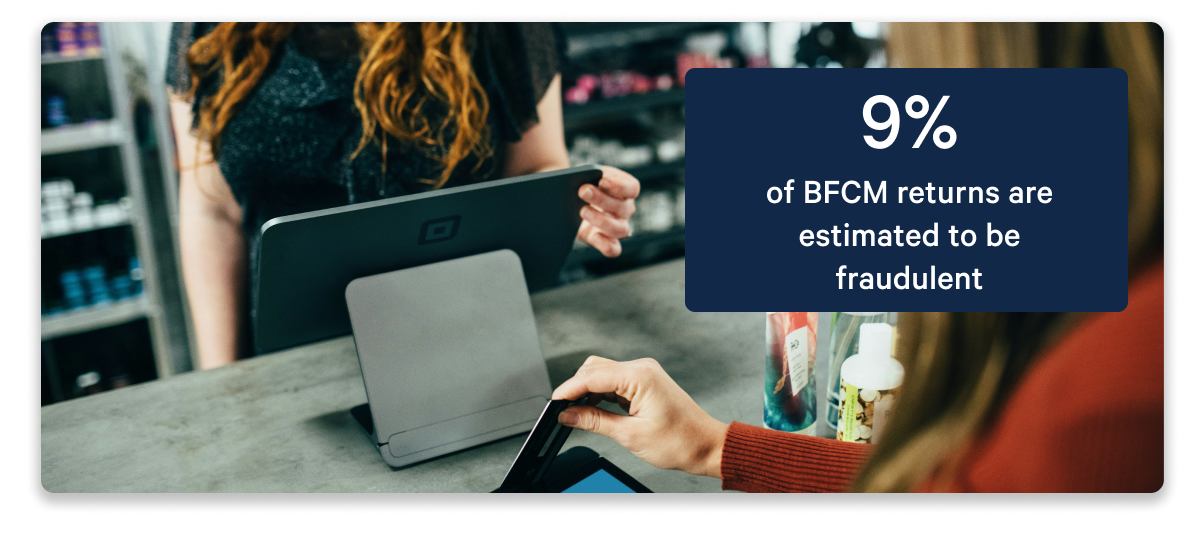
Fraud is a bigger problem than most teams assume, with 9% of returns estimated to be fraudulent. Retailers that track it report increases in overstated quantities, empty boxes, and decoy returns.
Agents have to verify claims without treating honest customers like suspects. That takes training, clear escalation rules, and time on every ticket.
What a bad returns experience costs you
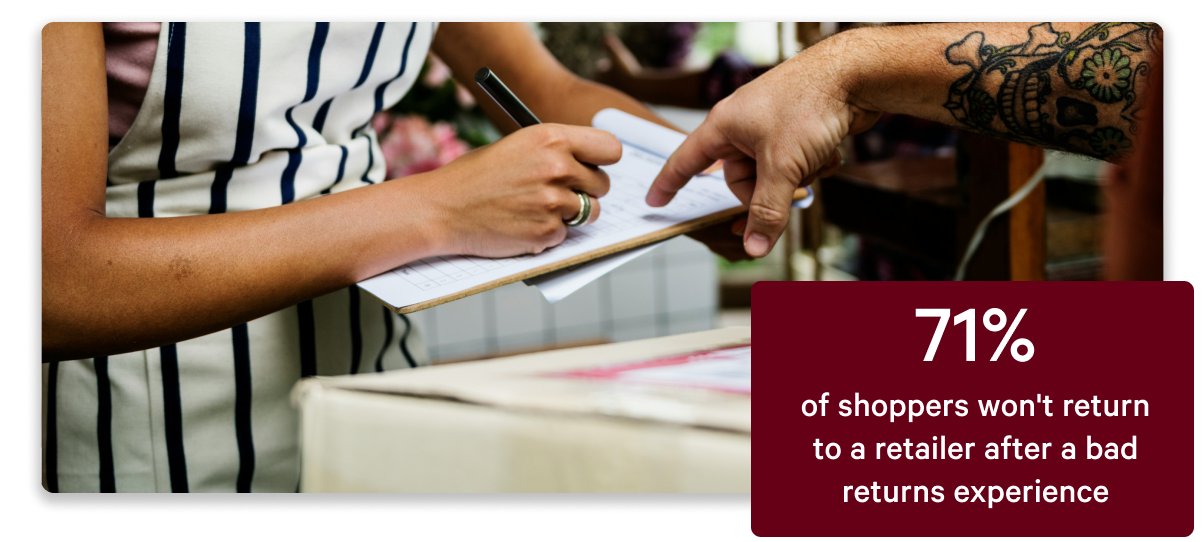
If BFCM brought you new customers, the return is often the second experience they have with your brand. NRF found that 71% of shoppers are less likely to shop with a retailer again after a poor returns experience, up from 67% in 2024, and about four in five say they will share a negative experience with friends and family.
Policy changes can backfire as well. 57% of shoppers say they decided not to shop with a retailer after it started charging for returns, up from 40% in 2024, and among merchants that charge, 47% report an increase in customer complaints. Fees protect margin, but they push pressure onto your support queue.
A post-BFCM support plan that holds up
- Forecast from your own queue. Multiply BFCM orders by your item return rate, then by your historical contacts per return. Tag last year’s tickets by reason so the forecast reflects your customers rather than an industry average.
- Staff for the tail. Retailers are planning the same way. NRF found that 43% plan to hire seasonal staff to handle returns and 49% plan to focus more on third-party logistics service levels. Extend your coverage until your return window closes, plus processing time.
- Write the playbook before the weekend. Put refund timelines, exchange rules, and fraud escalation steps into decision trees agents can follow. State the return deadline in the order confirmation email too, since 81% of shoppers check the return policy when shopping with a retailer for the first time.
- Message before customers ask. Notify shoppers when a return is received and when the refund is issued. The cheapest ticket is the one nobody has to write.
- Steer toward exchanges. Among retailers dealing with bracketing, 36% incentivize exchanges over refunds. An exchange keeps the revenue in your business.
How Influx helps with the post-holiday queue
Capacity is the hardest part of this plan. Return volume arrives over a few weeks and then settles, so permanent hires are tough to justify, and stretching an in-house team across holiday sales and returns is how queues age.
Influx builds fully managed human and AI support teams for eCommerce brands, and the model fits this problem. Contracts run month to month with no lock-in, so you can add agents for the return wave and scale back down afterward. Every new team goes through a two-week onboarding where Influx learns your refund policies, brand voice, and customer service strategy. With API access to your help desk, it also learns from your previous conversations, including how your team has handled refunds and exchanges before. Local managers and a brand-specific CX manager keep each team current and run QA, so a mid-season policy change reaches every agent.
The scale is proven. One Influx team of 76 agents resolves 250,000+ tickets per month with 24/7 coverage, and Influx works with 750+ partners across eCommerce, health and wellness, tech, and travel.
If you want return-season coverage in place before BFCM, talk to Influx about building your team.
Frequently Asked Questions
When is BFCM 2026?
Black Friday falls on November 27 and Cyber Monday on November 30, 2026.
What causes the most support tickets after BFCM?
Mostly order-status questions ("where is my order") and returns. Sizing and fit issues add another layer for fashion brands specifically, which is why deflecting those questions upfront, through better product content or clearer tracking, pays off more than it seems like it should.
What is a good first response time for BFCM support?
Best-in-class benchmarks are under one minute for live chat, under one hour for email, and one hour for social media. Up to 47% of consumers expect an answer within five minutes.
How much does customer support ticket volume increase during BFCM?
Pre-purchase conversations run about 51% heavier per day in the 2025 BFCM window than in the fall baseline, but this can be influenced by factors such as industry, consumer trends, and brand popularity. Forecast from your own orders and contact rate.
How many tickets can one agent handle per day during BFCM?
Many brands treat 40 to 60 tickets per agent per day as healthy. Use your own tickets-resolved-per-agent average to set your number.
How much does support ticket volume increase during Black Friday-Cyber Monday?
It varies by brand and channel, but spikes of double or more are common. Klaviyo's own 2025 data showed its AI support agent handling twice its normal weekly conversation volume on BFCM alone.
How long does the Black Friday support surge actually last?
Longer than four days. Deal-hunting now starts creeping in weeks before Black Friday itself, and returns and shipping questions run well into January, making it closer to a six-to-eight-week operational stretch than a single weekend.
What share of BFCM tickets can AI resolve?
The median brand resolves 45% of AI-touched tickets end to end, and top-quartile brands exceed 65%.
Get started with Influx
Influx was established in 2013 & has been trusted by 750+ brands globally, ranging from startup to scale.
Influx builds 24/7, near-shore global customer support teams. We provide fully managed, flexible & high-performance agents. Our services range from eCommerce support, tech support, sales support, AI Management, Enterprise solutions and more to give you the customer assistance you need to prioritize other responsibilities and continue scaling your business.
Make your support operations fast, flexible, and ready for anything with experienced, 24/7 support teams working on demand. See how brands work with Influx to deliver exceptional customer support or get a quote now.


 6 Circle - small.png)