


Blog > Cx excellence
CX trends for 2027: what support leaders should plan for now
The biggest shift in customer experience heading into 2027 is the move from AI versus agents to Human + AI teams that someone actively manages. Customers expect faster, more contextual, always-on service, and the brands meeting that bar split the work cleanly between automation and people. Here are five trends to budget for now, with examples from brands already running them.
1. Human + AI becomes the default operating model

Human + AI support is a model where an AI agent handles well-defined, high-volume questions, trained human agents handle everything that needs judgment, and both work from the same knowledge base. The agentless alternative is losing ground.
Gartner predicts that by 2027, half of the organizations that expected to significantly cut their service workforce will abandon those plans, because many are struggling to reach agentless staffing goals.
Florence Marine X shows what the replacement looks like. The surf and performance apparel brand uses an AI agent for order status, sizing, store locations and membership basics, while three dedicated human agents take made-to-order wetsuit questions, escalations and partnership inquiries. The full case study reports 91% CSAT, chat first responses averaging 19 seconds, and inbox zero at the end of every shift.
Eco-conscious brand Koh reached 84% CSAT with its human team and 86% on its AI agent using the same split.
As more brands learn what works, expect this pattern to become the standard setup rather than the experiment. To plan for it, write down which ticket intents the AI owns, which stay human, and who decides when exceptions are made.
2. AI management becomes its own role
Switching on an AI agent takes an afternoon. Keeping it accurate takes daily work, and WelleCo's experience shows the cost of skipping it. After a third-party AI tool tripled the brand's first-response time from 52 minutes to 3 hours and mishandled refunds, WelleCo moved to daily AI management by a dedicated manager. Automation climbed from 41% to over 90%, AI CSAT rose from 4.56 to 4.66, and the same human team closed about 10% more tickets per day.
Expect 2027 org charts and budgets to include someone who owns AI quality. A practical go-live bar comes from our guide to choosing an AI support partner: a test set built from your real tickets, an 85% or higher pass rate, and zero critical failures, meaning wrong answers that could cost money or trust. A confident wrong answer does more damage than a slow correct one.
3. Context and transparency become the baseline
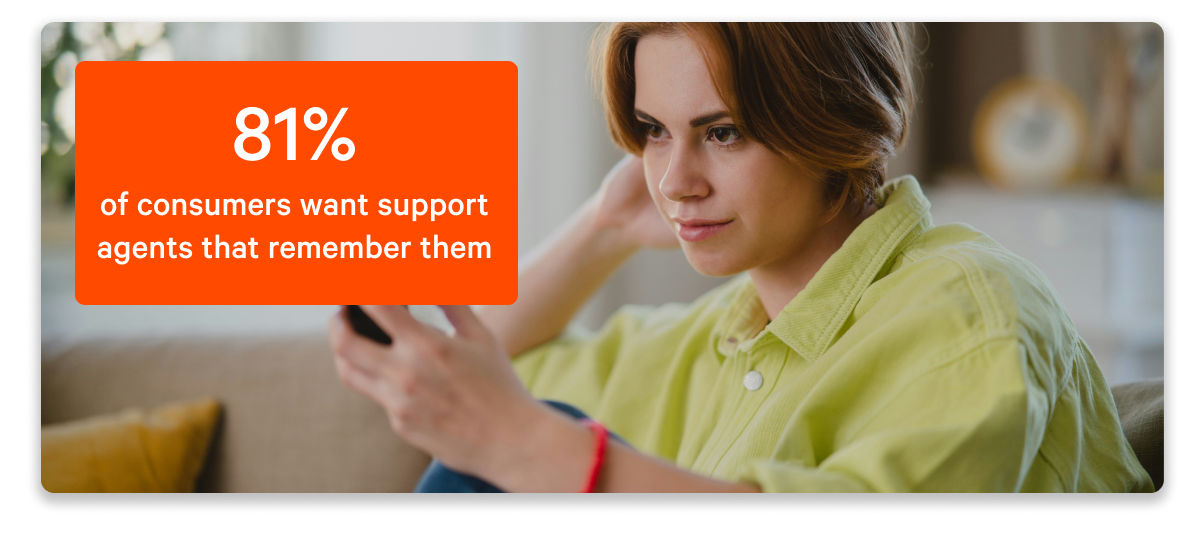
Customers now expect service that remembers them. Zendesk's CX Trends 2026 report found that 81% of consumers want agents to continue a conversation without backtracking, and 74% are frustrated when they have to repeat information.
The same report found that 95% expect an explanation for AI-made decisions, and 80% of CX leaders agree that transparency will be required for any customer-facing AI within two years.
Handoffs are where this gets tested. In the WelleCo case, AI-to-human handovers often forced agents to re-read long conversation histories, which slowed resolution. For 2027, make every handover carry a short summary of what the AI already tried, what the customer wants, and why it escalated.
4. Voice and visual channels get an AI front door
Phone is the channel brands most often leave thin, and AI voice agents are starting to change that.
Our research into voice AI for eCommerce, built on 100+ call notes and 50+ tools reviewed, found that Consio, Ringly.io and Rosie can already change Shopify orders during a call, such as cancelling an order, updating an address or starting a return.
The brands getting the most from voice AI let it answer first and route calls that need judgement to a person, with a summary attached to the transfer.
Visual support is moving the same way. Zendesk found that 76% of consumers would choose a company that lets them share text, images and video in the same thread. Plan for one conversation record per customer across channels, with voice treated as an extension of your helpdesk rather than a separate silo.
5. Capacity has to flex faster than hiring cycles
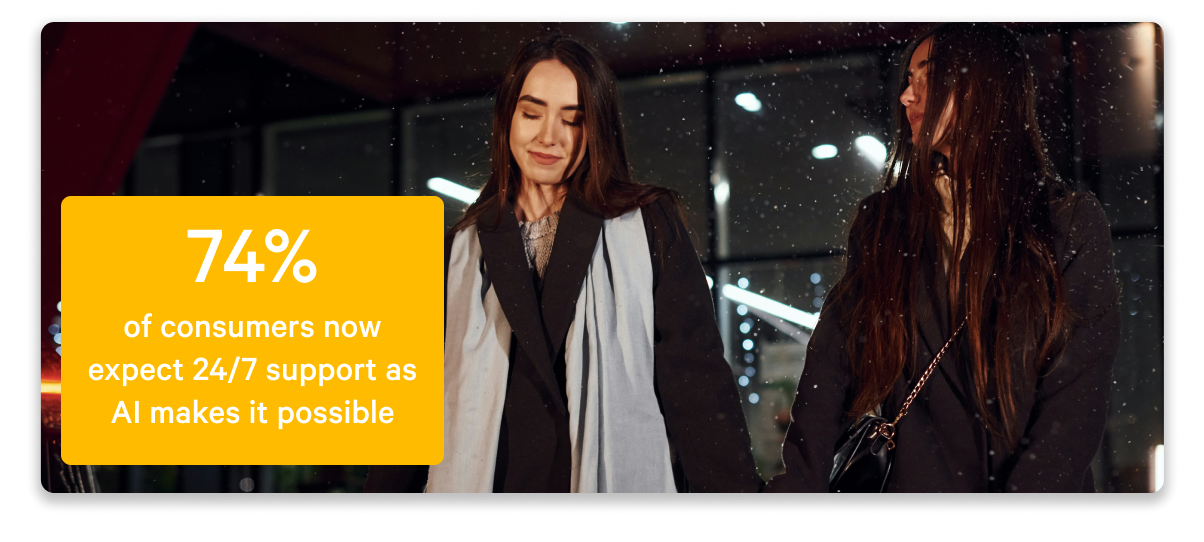
Demand moves faster than recruiting. Filling a single customer service seat takes 38 to 40 days on average, according to ContactBabel data, while Zendesk reports that 74% of consumers now expect 24/7 service as AI makes it possible.
The deflect, distribute, delegate framework is a useful planning model. Deflect repetitive contacts with automation, distribute what remains to flexible talent, and delegate full operations once volume outgrows a lean team. Measure resolution, not just deflection.
Gartner found that only 14% of customer service issues are fully resolved in self-service, so a healthy-looking deflection rate can hide a lot of unresolved customers.
A 4-step plan for your 2027 support model
- Audit your tickets by intent and label each one AI-owned, human-owned or shared.
- Name an owner for AI quality, with a go-live test set and a weekly review of AI-handled conversations.
- Standardize handoffs so every escalation carries context and a reason.
- Build a flex capacity plan: hire for roles that need deep institutional judgment, and delegate volume and off-hours coverage.
Get started with Influx
Influx was established in 2013 & has been trusted by 750+ brands globally, ranging from startup to scale.
Influx builds 24/7, near-shore global customer support teams. We provide fully managed, flexible & high-performance agents. Our services range from eCommerce support, tech support, sales support, AI Management, Enterprise solutions and more to give you the customer assistance you need to prioritize other responsibilities and continue scaling your business.
Make your support operations fast, flexible, and ready for anything with experienced, 24/7 support teams working on demand. See how brands work with Influx to deliver exceptional customer support or get a quote now.




 6 Circle - small.png)