




















Blog > Cx excellence
5 brands that successfully navigated PR crises (and what CX leaders can learn from them)
When a brand's reputation collapses, the first instinct is usually to manage the narrative. What the most resilient companies learn (sometimes, painfully) is that the narrative follows the customer experience. Fix how customers are treated, and the story repairs itself.
This article examines five brands that faced serious public crises and recovered, analyzing not just what they communicated, but how each incident forced a fundamental rethink of their customer experience operations.
The pattern across these cases is consistent and instructive: companies that use a crisis to overhaul their CX infrastructure emerge stronger; those that treat it as a communications problem alone tend to relapse.
1. Johnson & Johnson (1982): the case that defined the playbook
The crisis
In 1982, seven people in the Chicago area died after consuming cyanide-laced Tylenol capsules. The sabotage was external, not caused by J&J, but the company faced an existential threat to its flagship product.
What they did
J&J pulled 31 million bottles from shelves nationwide, absorbing a massive short-term financial loss. CEO James Burke prioritized the safety of consumers over the company's quarterly performance, a decision that was not obvious at the time.
The company redesigned packaging industry-wide, introducing tamper-evident seals that became a permanent safety standard.
The CX lesson
J&J's response worked not because it was good PR, but because it rebuilt operational credibility first. The tamper-proof packaging was concrete evidence that the company had addressed the underlying vulnerability.
80% of consumers reported they would purchase J&J products post-crisis, an unusually high recovery rate that reflects brand trust restored through visible action.
Key CX takeaway: When a safety or quality failure is at the core of a crisis, no amount of empathetic messaging substitutes for tangible operational change. Customers experience the product before they experience the communication.
2. Airbnb (2011): turning a platform failure into a trust infrastructure
The crisis
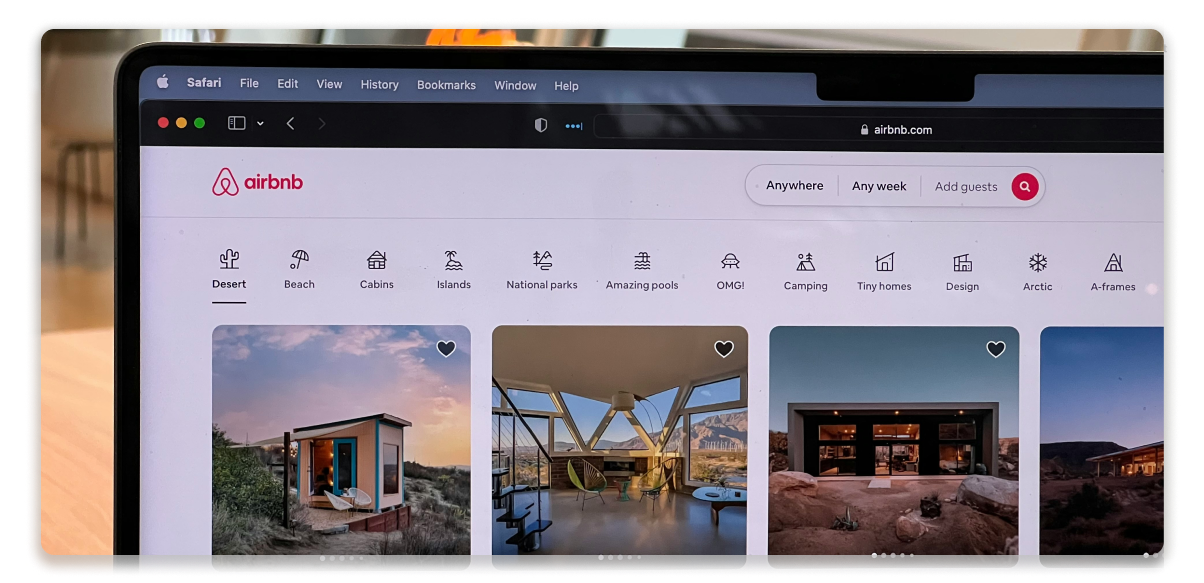
In 2011, a San Francisco host known as "EJ" published a detailed blog post describing how her apartment had been ransacked and vandalized by guests.
The post went viral, and Airbnb's initial response, slow and inadequate, compounded the damage. For a platform whose entire value proposition rested on trust between strangers, this was an existential test.
What they did
CEO Brian Chesky published a blog post titled "We screwed up and we're sorry," taking full personal responsibility. Airbnb then introduced what was then the $1 million Host Guarantee, created a dedicated 24-hour customer support hotline, expanded its trust and safety team, and built an internal task force for manual review of suspicious activity.
According to reporting from The Washington Post, the guarantee would also apply retroactively to hosts who had already reported damage, signaling genuine accountability rather than future-facing PR.
The CX lesson
Airbnb's recovery was rooted in a structural redesign of the host-facing CX layer. The 24/7 hotline and expanded support team weren't just crisis response; instead, they became permanent infrastructure.
The company understood that trust in a two-sided marketplace is fragile because it's distributed across every host-guest interaction, not just marketing. Improving the support experience was the only credible way to signal that the platform took safety seriously.
Key CX takeaway: For platforms and marketplaces, the support experience is the trust experience. When something goes wrong between users, how quickly and generously the platform intervenes determines whether trust is rebuilt or permanently eroded.
3. Chipotle (2015-2019): the slow rebuild of earned trust
The crisis
Between July and December 2015, Chipotle suffered a series of food safety incidents across the US, from E. coli, norovirus, to salmonella, that collectively sickened hundreds of customers across multiple states.
Same-store sales dropped more than 29% in Q1 2016, and the company's market value fell by billions. The crisis struck at the core of Chipotle's "Food With Integrity" brand promise, arguably the worst possible alignment between the crisis and the brand's identity.
What they did (and what took time)
Chipotle's initial response was heavily criticized. The company was slow to issue a formal statement, and the first public response from CFO Jack Hartung was perceived as deflecting blame toward the CDC and media.
The turning point came in December 2015 when CEO Steve Ells appeared on the Today Show, publicly apologized, and described new safety protocols.
The company subsequently closed locations for employee health training, introduced enhanced testing procedures, launched a transparency campaign called "Behind the Foil", and doubled down on digital customer experience, including delivery partnerships and a loyalty program. Full financial recovery took until approximately 2019.
The CX lesson
Chipotle illustrates two things simultaneously: how badly a delayed, defensive response extends recovery timelines, and how powerful radical operational transparency can be once a brand commits to it.
"Behind the Foil" was effective because it gave customers direct visibility into the kitchen, turning the operational process that had been the source of the crisis into the vehicle of its repair.
Chipotle essentially rebuilt its customer trust architecture around proof, not promise.
Key CX takeaway: Every day a brand delays addressing the operational root cause of a crisis, it extends the timeline for customer trust recovery. Speed at layer 1 is the most underrated crisis management variable.
4. Samsung (2016): recall as a CX redesign

The crisis
In August 2016, Samsung launched the Galaxy Note 7 to strong reviews. Within weeks, reports of devices overheating and catching fire began circulating globally.
The total cost of the crisis reached approximately $5.3 billion, and Note 7s were banned from US flights. Samsung issued an initial recall, attributed the fault to one battery supplier, then the replacement devices caught fire too, revealing that the diagnosis had been incomplete.
What they did
Samsung eventually halted all Note 7 production, deployed 700 engineers to test 200,000 devices and 30,000 batteries, and published a full technical investigation. The CEO issued a personal apology in full-page ads in three major US newspapers.
The company extended warranty periods across its device range, upgraded customer support infrastructure, and launched an eight-point battery safety check that became the standard for all future devices. When the Galaxy S8 launched in early 2017, Samsung positioned it as a proof point, not just a new product.
The CX lesson
Samsung's recovery was underpinned by a commitment to radical transparency in technical explanation: livestreaming the investigation findings, sharing detailed root-cause analysis, allowing third-party audits.
This is unusual for a technology company and it worked precisely because it was unusual. By April 2017, 89% of existing Samsung customers said they would consider buying a Samsung phone again, with 66% of non-Samsung customers also expressing openness to the brand. This was a 15-point increase from October 2016.
Samsung's Net Promoter Score, which had fallen 23 points during the crisis, began recovering as customers saw evidence that processes had genuinely changed.
Key CX takeaway: Transparent documentation of how you fixed a problem is often more trust-rebuilding than communicating that you fixed it. Showing the investigation process gave customers verifiable evidence, not just a promise.
5. United Airlines (2017): a partial recovery and its limits
The crisis
In April 2017, video of Dr. David Dao being forcibly dragged off an overbooked United Airlines flight went viral. United's stock lost nearly $1 billion in market value within days.
What made the crisis significantly worse was the communication response: CEO Oscar Munoz initially defended staff in an internal memo which leaked, describing Dao as "disruptive and belligerent," and the first public apology referred to the incident as "re-accommodating" passengers.
The mismatch between corporate language and video evidence became its own story.
What they eventually did
United rolled out 10 policy changes that addressed the root of the incident:
- Law enforcement would no longer be called to enforce airline business policies
- Seated passengers would not be involuntarily removed
- Voluntary compensation caps increased to $10,000
- A "customer solutions" team would be deployed at gates
- Frontline staff would receive a new "in the moment" app to compensate passengers proactively when disruptions occurred
The CX lesson
United's case is instructive both for what worked and what didn't. The policy changes were substantive and customer-centered, and the airline's financial performance did recover.
But the delayed, tone-deaf initial communication had already framed the story globally, and the brand reputation damage lingered for years, particularly in the Chinese market, where the cultural sensitivity around respect and dignity amplified the incident's impact.
The lesson here is that communication mistakes at the front of a crisis can constrain how much operational improvements at the back can rehabilitate a brand.
Key CX takeaway: Response speed at the customer-facing layer matters enormously in the first 24-48 hours. Even when operational fixes take time, the tone and empathy of initial customer communication either buys goodwill or destroys it before the fixes arrive.
3 things all five brands share
1. The crisis was fundamentally a customer experience failure, not a communications failure.
In each case, the incident exposed either a broken process (J&J packaging), a missing infrastructure (Airbnb's host protection), an operational gap (Chipotle's supply chain and food safety protocols), a quality failure (Samsung's battery testing), or a cultural misalignment between policy and values (United's staff empowerment).
Communications made things better or worse, but didn't cause or fix any of them.
2. Recovery was proportional to the depth of the operational change.
The brands with the fastest and most durable recoveries such as in the cases of J&J and Samsung also made the most structural changes to their underlying processes.
Chipotle's recovery took four years in part because the operational changes came late and required rebuilding trust step by step through accumulated experience rather than a single decisive action.
3. Customer-facing teams were the primary medium of recovery, not advertising.
In every case, the quality of the support experience during and after the crisis determined how customers experienced the company's commitment to recovery.
Airbnb's 24/7 hotline, Samsung's extended warranty and enhanced customer support, United's in-the-moment compensation app. These were not just policy changes. They were instead strong signals delivered through every customer interaction.
What this means for brands managing support at scale
A PR crisis is, in most cases, a customer experience crisis in concentrated form.
The same forces that determine how customers experience a crisis (response speed, empathy, operational competence, consistent communication across touchpoints) are the same forces that determine everyday CSAT, first-contact resolution rates, and customer retention.
Brands that invest in high-quality, scalable customer support infrastructure before a crisis hits are measurably better positioned when one arrives:
- They have trained teams who know the brand voice.
- They have escalation processes that can handle volume spikes.
- They have management layers that can adapt messaging quickly.
- And they have data visibility: ticket trends, CSAT signals, emerging complaint categories, all of which can flag a developing situation before it reaches the media.
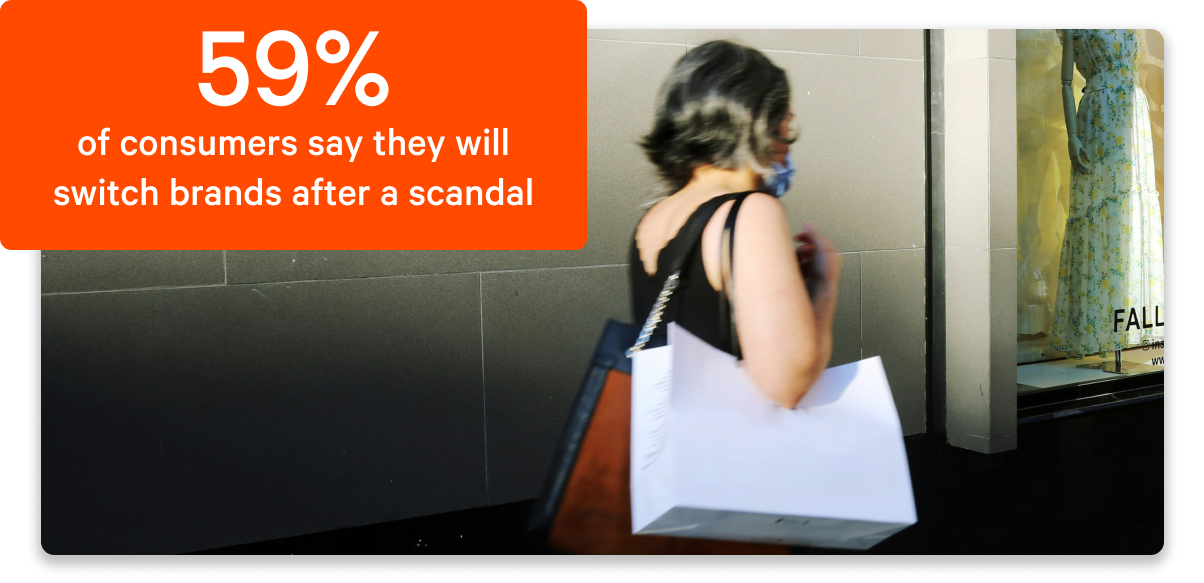
According to a 2023 PwC survey, 59% of consumers switch brands after a scandal. But Edelman's research consistently finds that companies demonstrating transparency and accountability recover customer trust at significantly higher rates.
The gap between those two outcomes often comes down to whether the support infrastructure, that is: the human and operational layer between a brand and its customers, is capable of delivering that transparency and accountability at volume.
This is the operational dimension of crisis management that rarely receives enough attention in post-mortems. A press release is one moment of communication.
A support team handles thousands of moments of communication every day, and during a crisis, each one either accelerates or delays recovery.
Get started with Influx
Influx was established in 2013 & has been trusted by 750+ brands globally, ranging from startup to scale.
Influx builds 24/7, near-shore global customer support teams. We provide fully managed, flexible & high-performance agents. Our services range from eCommerce support, tech support, sales support, AI Management, Enterprise solutions and more to give you the customer assistance you need to prioritize other responsibilities and continue scaling your business.
Make your support operations fast, flexible, and ready for anything with experienced, 24/7 support teams working on demand. See how brands work with Influx to deliver exceptional customer support or get a quote now.

Read these next
See how companies work with Influx to deliver flexibility and scale.
Or read our client testimonials or case studies
 6 Circle - small.png)