




















Blog > Ai leadership
The AI customer support model that actually works
The promise of AI in customer support has always been full automation: a bot that handles everything and eliminates the need for a human team. But data from 20+ ecommerce brands tells a different story.
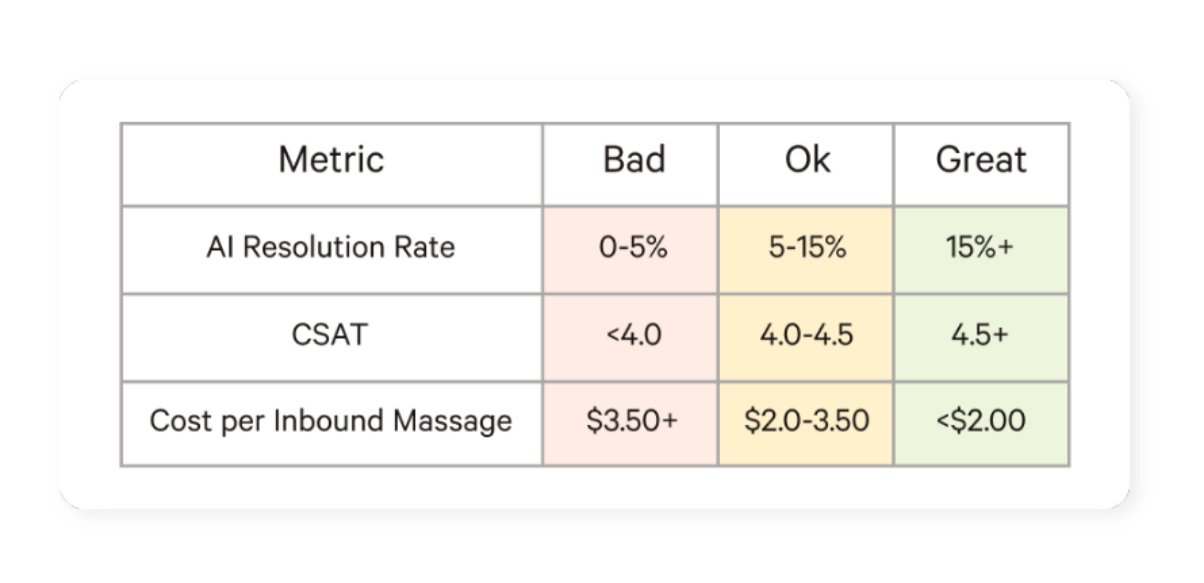
The teams with the highest CSAT scores aren't the most automated. None of the top performers in the dataset exceed 20% AI resolution. The sweet spot is 10–15%.
That's not a limitation. It's a model. And it’s also only a start. The best teams use AI to empower their human teams too.
What AI-First actually means
AI-First doesn't mean AI-only. It means AI is embedded at every layer of your support operation, not just as a resolution tool, but as an engine that makes your human agents faster, sharper, and more consistent.
In practice, it works like this:
AI resolves the easy stuff: order status, shipping updates, simple returns. Predictable, low-emotion tickets that don't need a human. That's your 10–15%.
AI assists on everything else: surfacing order history, suggesting responses, flagging sentiment, adding context before a human agent even reads the ticket. The remaining 85–90% of tickets still go to humans, but those humans are working with a lot more information than before.
The result: human agents who can comfortably handle 1,000+ tickets per month, not because they're working harder, but because AI is doing the prep work.
Why this outperforms full automation
When AI resolution climbs above 20–30%, satisfaction starts to slip. Two examples from the dataset:
- 51% AI resolution → 3.7 CSAT
- 30% AI resolution → 3.6 CSAT
Meanwhile, teams running 10–15% AI resolution consistently score 4.6+ CSAT and operate at $1–$1.75 per inbound message.
The reason is simple. Most customer support interactions, even "simple" ones, carry some emotional weight. A customer asking about a delayed order isn't just looking for information. They want to feel heard. AI can answer the question. A well-supported human agent can do both, and work across more platforms to go deeper on truly resolving the problem and unlocking the best long-term solution.
What Bad, Ok and Good looks like
What makes it work
The teams hitting these numbers share a few habits. They're deliberate about which tickets AI owns (typically the top 3–5 ticket types by volume). They invest in AI as a training and context tool, not just an automation layer. And they measure cost per message weekly, the clearest ongoing signal of whether the model is healthy.
The best ecommerce support teams right now aren't winning because they've automated more. They're winning because they've built a model where AI and humans each do what they're best at.
That's the model that works.
If interested in setting up an AI-first CX operation, get in touch here, or read more about AI agent management.
Get started with Influx
Influx was established in 2013 & has been trusted by 750+ brands globally, ranging from startup to scale.
Influx builds 24/7, near-shore global customer support teams. We provide fully managed, flexible & high-performance agents. Our services range from eCommerce support, tech support, sales support, AI Management, Enterprise solutions and more to give you the customer assistance you need to prioritize other responsibilities and continue scaling your business.
Make your support operations fast, flexible, and ready for anything with experienced, 24/7 support teams working on demand. See how brands work with Influx to deliver exceptional customer support or get a quote now.

Read these next
Or read our client testimonials or case studies
 6 Circle - small.png)